
Layered necklaces — how to wear them without looking overdone
In short: For layered necklaces to look harmonious, ensure a length difference of at least 3-4 cm between them – this creates a tiered structure. Two necklaces are the most controlled option, three only work with a clear difference. One necklace should be a statement piece, the others delicate, otherwise several massive necklaces will clash.
Wearing multiple necklaces at once is either "I know what I'm doing" or "I've put on everything I own." Most people fall into the second category not because they lack style understanding, but because there's one specific, easy-to-make mistake.
The main mistake: identical length
If two necklaces hang at the same level, they compete. There's no hierarchy, no rhythm. It looks like two identical necklaces, even if they are beautiful individually.
The rule is simple: there should be a minimum difference of 3-4 centimeters in length between each necklace. More is better. This way, they form a tiered structure – each in its place, each visible.
How many necklaces is the limit?
Two is the most controlled option. Three can work if there's a clear difference between them. Four or more almost always looks cluttered unless it's a deliberate maximalist look.
There's a paradox: three necklaces are often worse than two, even if each one individually is more beautiful. Three items attract more attention than necessary and cease to be read as an ensemble.
A working structure
Classic option: a short necklace or choker (38-42 cm) plus a medium one (45-50 cm). If you want a third, a long one (60+ cm).
The short one frames, the medium one adds volume, the long one adds depth. Three different levels and three different roles.
Massiveness
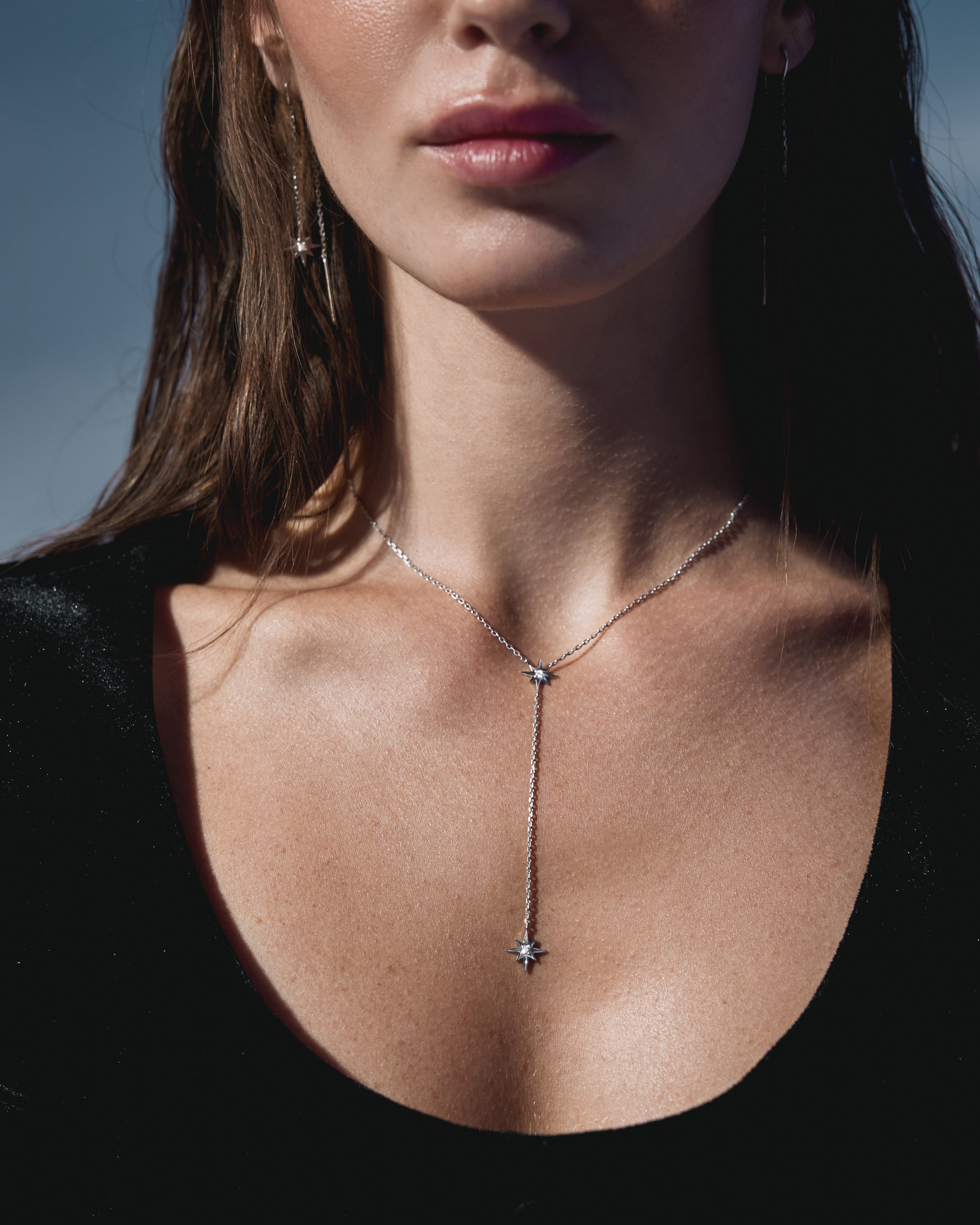
The most common mistake after length is combining several massive necklaces. If one is a chain and one has a large pendant, that's fine. If both are massive, they clash.
The general rule: one necklace is "main" (a statement piece), the others are delicate and subtle. Or, conversely, all are delicate and equally valued – then it's about texture, not an accent. But not two accents at once.
Materials and textures
Mixing chains of different textures is good. A diamond-cut chain and a flat necklace, or a chain and a string of pearls. Variety doesn't mean chaos if there's a common element – metal, color, style.
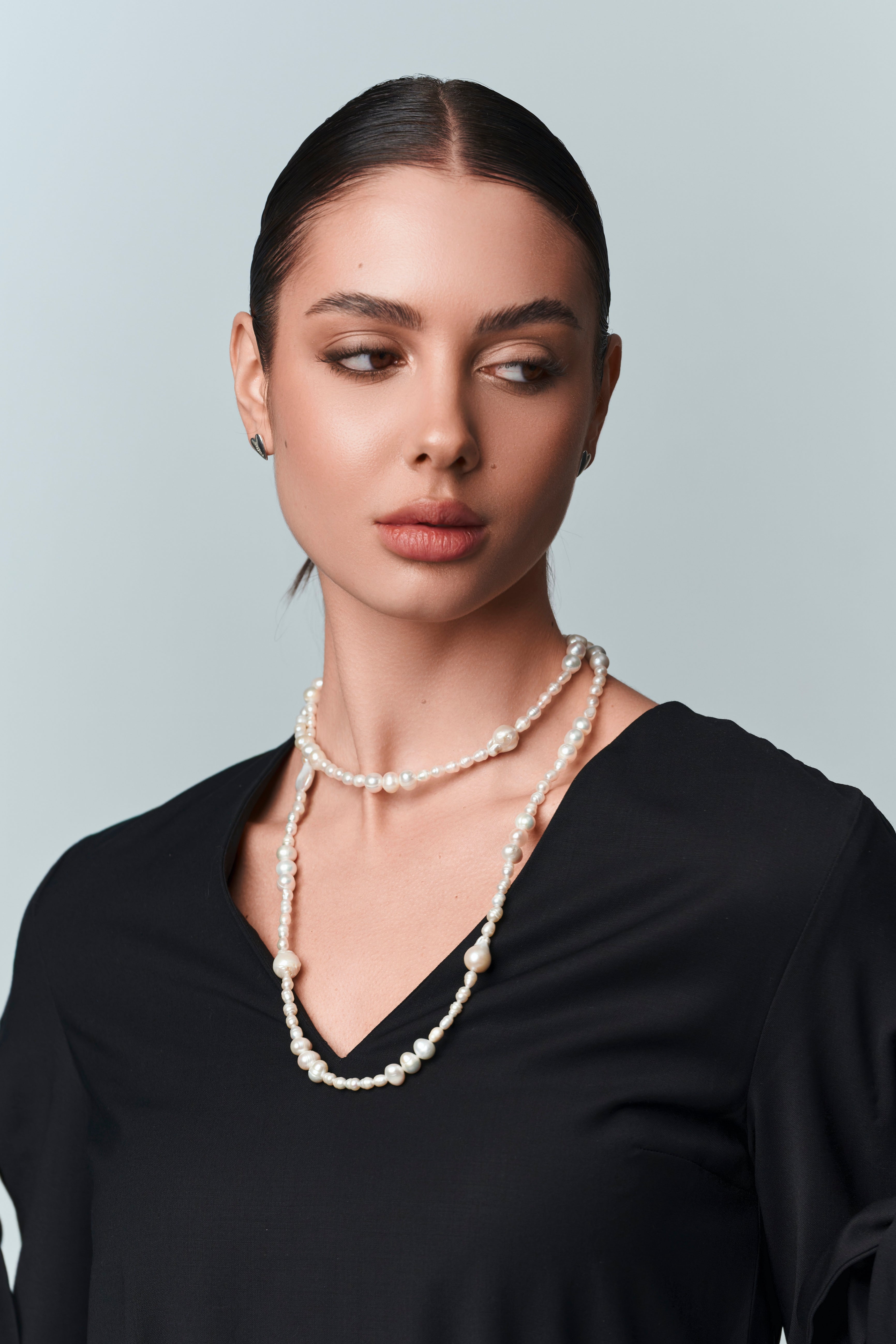
Layer Pearl Combination — a ready-made option for a layered effect. 100 cm of natural pearls of various shapes, worn in one or two wraps. No need to choose – the solution is already there.
What to combine with
Necklace stacking is best read with an open neckline. A turtleneck or roll-neck hides the lower necklace and destroys the tiered effect. An open décolletage, V-neck, or a basic T-shirt – perfect.
With bright or printed clothing – a maximum of one delicate necklace. Stacking will compete with the print and lose.
Frequently asked questions
Can silver and gold be combined in stacking?
Yes. But there needs to be a logic – either both are as delicate as possible, or one color dominates and the other is an accent. Chaotic mixing of colors and massiveness will give a sense of disarray.
Can necklaces be worn with earrings when stacking?
Yes, but with a caveat. If the necklaces are already prominent – keep earrings simple, studs or small hoops. Large earrings plus three necklaces – too much.
What to do if necklaces get tangled?
Difference in length and weight. Light, delicate necklaces of the same level almost always get tangled. If there is a distance between them and varying massiveness – almost never.
Read also: How to combine jewelry: rules and when to break them · How to wear silver jewelry with different clothes: specific looks · What jewelry to wear to work: style without risk
More on the topic – in the Necklaces collection.