
How to clean silver jewelry at home: what really works
In short: Silver is cleaned at home without abrasives: light tarnish is removed with a soft cloth using linear motions, noticeable tarnish – with abrasive-free soap and a soft brush, and heavy tarnish – with baking soda and foil with boiling water, which converts silver sulfide back to pure silver. The baking soda method is not suitable for pearls, tourmaline, opal, and glued elements.
Most silver cleaning tips on the internet are either too complicated or harmful. Toothpaste scratches. Baking soda is also abrasive. Boiling is not for all items. Here's what really works without the risk of damaging your jewelry.
Light Tarnish — A Cloth is Enough
A soft microfiber cloth or a special silver polishing cloth is the first and often only tool you need. Wipe after each wear, and tarnish simply won't have time to form.
The motion should be linear, not circular – circular motions leave micro-scratches that become noticeable over time.
Noticeable Tarnish — Soap and a Soft Brush
Warm water (not hot), a drop of abrasive-free liquid soap, a baby toothbrush with soft bristles. Gently rub the surface, rinse with warm water, and dry thoroughly.
Don't leave it wet – moisture accelerates tarnishing. Immediately after rinsing, dry thoroughly.
Heavy Tarnish — Baking Soda and Foil
An abrasive-free method. Line a bowl with foil, shiny side up. Add a tablespoon of baking soda and pour boiling water over it. Place the jewelry so that it touches the foil. After 3–5 minutes, remove, rinse, and dry.
An electrochemical reaction occurs – silver sulfide converts back to pure silver. No abrasives, no scratches.
However, this method is not for jewelry with pearls, tourmaline, opals, or glued elements. Only for pure silver or silver with hard stones.
Jewelry with Natural Stones — Separate Rules
Pearls, baroque pearls, selenite, smoky quartz – no solutions and no immersion. Only a damp cloth and immediately dry. These stones are porous or soft and react to chemicals.
Aquamarine, emerald, moissanite – are more resilient. They can be rinsed with warm water and soap using a soft brush. Ultrasonic cleaning only if there are definitely no cracks or inclusions.
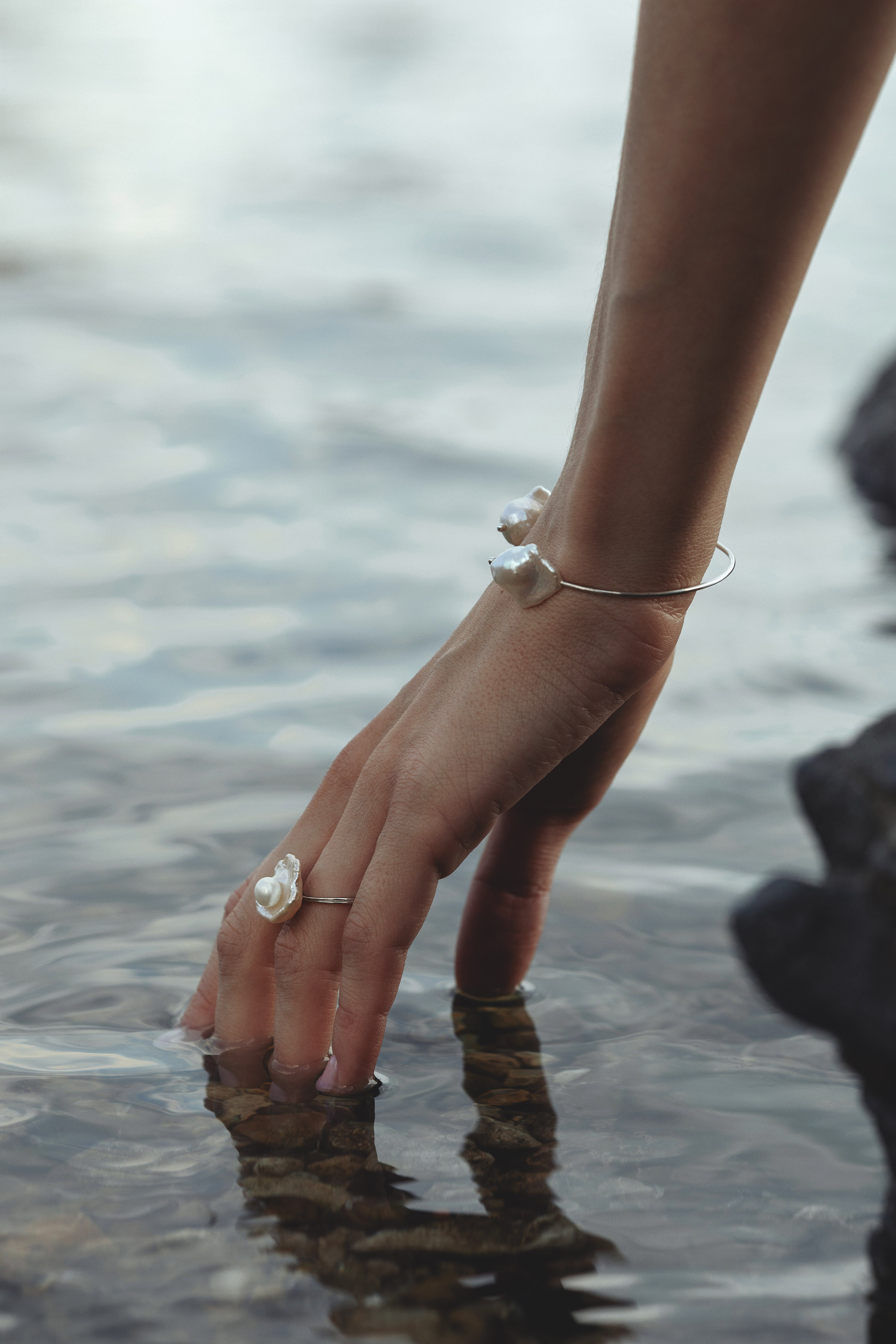
For jewelry with natural pearls from the Ocean Muse collection – only a dry or slightly damp cloth. Pearls do not like water.
What Not to Use to Clean Silver
Toothpaste – contains abrasives. Even "soft" toothpaste will scratch the surface with regular use.
Stiff brushes – leave visible scratches.
Ultrasonic cleaner – good for pure silver, but harmful to pearls and soft stones.
Chlorine bleach and chemical solvents – destroy the metal surface.
Frequently Asked Questions
How often should silver jewelry be cleaned?
Wipe with a cloth – after each wear. Rinse with soap – once a month if you wear it often. Deep cleaning with baking soda and foil – when tarnish is already noticeable, usually once every few months.
Can silver be cleaned with lemon juice?
Acid does indeed dissolve tarnish. But it also interacts with the metal and, with frequent use, dulls the surface. It's best to avoid it.
After cleaning, silver still tarnishes very quickly – why?
Rapid tarnishing after cleaning usually means contact with an aggressive environment – perfume, sweat, chlorinated water. Store jewelry in a closed container and remove it before swimming.
Read also: Why silver tarnishes and what to do about it · How to care for silver, pearls, and stones: simple and gentle · How to properly store jewelry so that it retains its beauty